What Is Industrial Rooftop Solar? A Complete Guide for Factories and Industries in Bangladesh
For many factories and industrial facilities, electricity is one of the most important operating costs. At the same time, large industrial buildings often have something valuable that is underutilized: a large rooftop area exposed to sunlight.
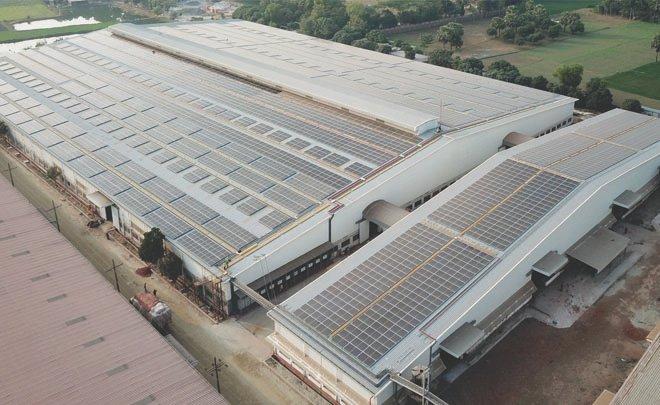
Industrial rooftop solar uses this available roof space to install a Solar PV (Photovoltaic) system that converts sunlight into electrical energy for use within the factory or facility.
Unlike a utility-scale solar power plant that requires a large area of land, rooftop solar allows an industrial facility to generate electricity at or near the point where the electricity is consumed.
For factories, this can be particularly relevant because many industrial facilities have substantial daytime electricity demand—the same period when a rooftop solar PV system can generate electricity.
In Bangladesh, rooftop solar has also become an important part of renewable-energy development. SREDA's National Solar Help Desk provides information on rooftop solar and net metering, while the Net Metering Guideline 2025 provides the current framework published for net-metered renewable-energy systems.
How Does Industrial Rooftop Solar Work?
An industrial rooftop solar system typically consists of several major components working together.
1. Solar PV Modules
Solar panels are installed across suitable sections of the factory roof.
The panels convert sunlight into DC electricity through the photovoltaic effect.
2. Solar Inverters
The electricity generated by the solar panels is DC electricity, while most factory electrical equipment operates using AC electricity.
The solar inverter converts the generated DC electricity into usable AC electricity and manages the electrical interface between the PV system and the facility.
3. Mounting Structure
A properly engineered mounting structure secures the solar modules to the roof while taking into account factors such as:
- Roof structure
- Wind loading
- Panel orientation
- Panel inclination
- Maintenance access
- Drainage
- Roof accessibility
- Electrical cable routing
4. DC and AC Protection
Industrial solar systems require appropriate protection and switching equipment.
Depending on the system design, this can include:
- DC isolators
- DC protection
- AC protection
- Surge protection
- Circuit breakers
- Earthing and bonding
- Lightning protection
- Monitoring equipment
5. Monitoring System
A modern industrial solar system can incorporate monitoring equipment to track parameters such as:
- Solar generation
- Inverter performance
- Energy production
- System faults
- Daily/monthly generation
- Performance trends
This allows the facility's technical team to monitor the system and identify abnormal performance.
6. Grid Interconnection
For a grid-connected industrial solar system, the solar installation must be properly integrated with the factory's existing electrical infrastructure.
This is where electrical engineering becomes particularly important.
The system may need to be coordinated with the factory's:
- Transformer
- LT/MV switchgear
- Protection system
- Distribution system
- Metering arrangement
- Existing electrical loads
- Utility interconnection requirements
How Does Solar Power Reach the Factory's Electrical Loads?
A simplified industrial rooftop solar system can be understood like this:
Sunlight → Solar PV Modules → DC Power → Solar Inverter → AC Power → Factory Electrical Distribution System → Factory Loads
If the solar system is generating less electricity than the factory requires, the remaining electricity can be supplied by the grid.
For example:
Factory demand: 1,000 kW
Solar generation: 600 kW
Grid requirement: approximately 400 kW
If solar generation exceeds the facility's instantaneous requirement, the treatment of surplus electricity depends on the applicable system configuration and regulatory framework.
What Is Net Metering?
Net metering is an important concept for grid-connected rooftop solar.
Under the net-metering mechanism, electricity generated by a renewable-energy system is first used by the consumer. Depending on the applicable rules and system conditions, surplus electricity can be exported to the distribution grid, with the energy accounted for through the applicable metering and billing mechanism.
For an industrial consumer, this means a properly designed rooftop solar system can work together with the existing electricity supply rather than necessarily operating as an isolated power system.
The exact eligibility, capacity, metering, interconnection and settlement requirements should always be checked against the latest applicable SREDA, utility and regulatory requirements before designing a project.
How Much Solar Can a Factory Install?
There is no single solar capacity that is suitable for every factory.
A proper industrial rooftop solar project should begin with an engineering and feasibility assessment.
Several factors need to be evaluated.
1. Electricity Consumption
The factory's electricity consumption profile is one of the most important considerations.
Engineers may examine:
- Monthly electricity bills
- Hourly or interval load data
- Daytime electricity consumption
- Peak demand
- Load profile
- Operating hours
- Seasonal variations
A factory operating heavily during daylight hours may have a different solar design requirement from a facility whose major electricity consumption occurs at night.
2. Available Roof Area
The total roof area is not necessarily the usable solar area.
Engineers need to consider:
- Existing equipment
- Water tanks
- HVAC equipment
- Skylights
- Roof structures
- Walkways
- Fire-safety access
- Maintenance pathways
- Shading
- Roof orientation
- Structural limitations
Therefore, a roof survey is an important part of the feasibility process.
3. Roof Structure
Industrial solar installations add additional loads to a building.
Before installation, the roof and supporting structure should therefore be assessed according to the project's engineering requirements.
The objective is not simply to fit as many panels as possible, but to develop a system that is structurally appropriate, maintainable and electrically safe.
4. Existing Electrical Infrastructure
The factory's electrical infrastructure also influences the design.
Engineers may need to evaluate:
- Transformer capacity
- Existing switchgear
- Cable capacity
- Protection systems
- Distribution boards
- Power factor
- Short-circuit considerations
- Earthing system
- Utility interconnection
This is one reason why industrial rooftop solar should be approached as an engineering project, rather than simply a panel-installation project.
Why Is Industrial Solar Different from Residential Solar?
A small residential solar system and a large industrial rooftop solar project may use the same fundamental PV technology, but their engineering requirements can be very different.
Industrial systems can involve:
Large PV capacity + multiple inverters + extensive DC/AC cabling + electrical protection + transformer integration + monitoring + utility coordination + structural considerations + commissioning.
A factory may also have a complex electrical network involving MV/LV substations, large motors, production machinery and multiple distribution panels.
Therefore, industrial rooftop solar requires coordination between solar engineering and electrical power engineering.
Key Benefits of Industrial Rooftop Solar
1. Utilize Existing Rooftop Space
Instead of requiring additional land, rooftop solar makes productive use of an existing industrial asset.
This is particularly relevant for factories where available land around the facility is limited.
SREDA has specifically highlighted rooftop solar as an approach for increasing renewable-energy generation from existing buildings and industrial facilities.
2. Generate Electricity Close to the Load
Electricity is generated at the factory premises where it can be consumed.
This can make rooftop solar an attractive option for facilities with significant daytime electricity demand.
3. Reduce Dependence on Grid Electricity
Solar generation can offset a portion of the electricity that would otherwise need to be supplied from the grid, subject to the system design and operating conditions.
4. Support Renewable Energy Goals
Rooftop solar contributes to the wider adoption of renewable electricity.
Bangladesh's Renewable Energy Policy 2025 and related rooftop-solar initiatives have placed additional emphasis on renewable-energy development and rooftop solar.
5. Support Corporate Sustainability
For export-oriented industries and organizations with sustainability objectives, renewable electricity can also form part of their broader environmental and energy-management strategy.
Comments (0)
Leave A Comment