Home Rooftop Solar
বাসাবাড়ির রুফটপ সোলার
Choose a residential solar system around your electricity use, available roof and backup priorities. Start with a practical distinction: reducing your grid bill and running appliances during a power cut are different requirements.
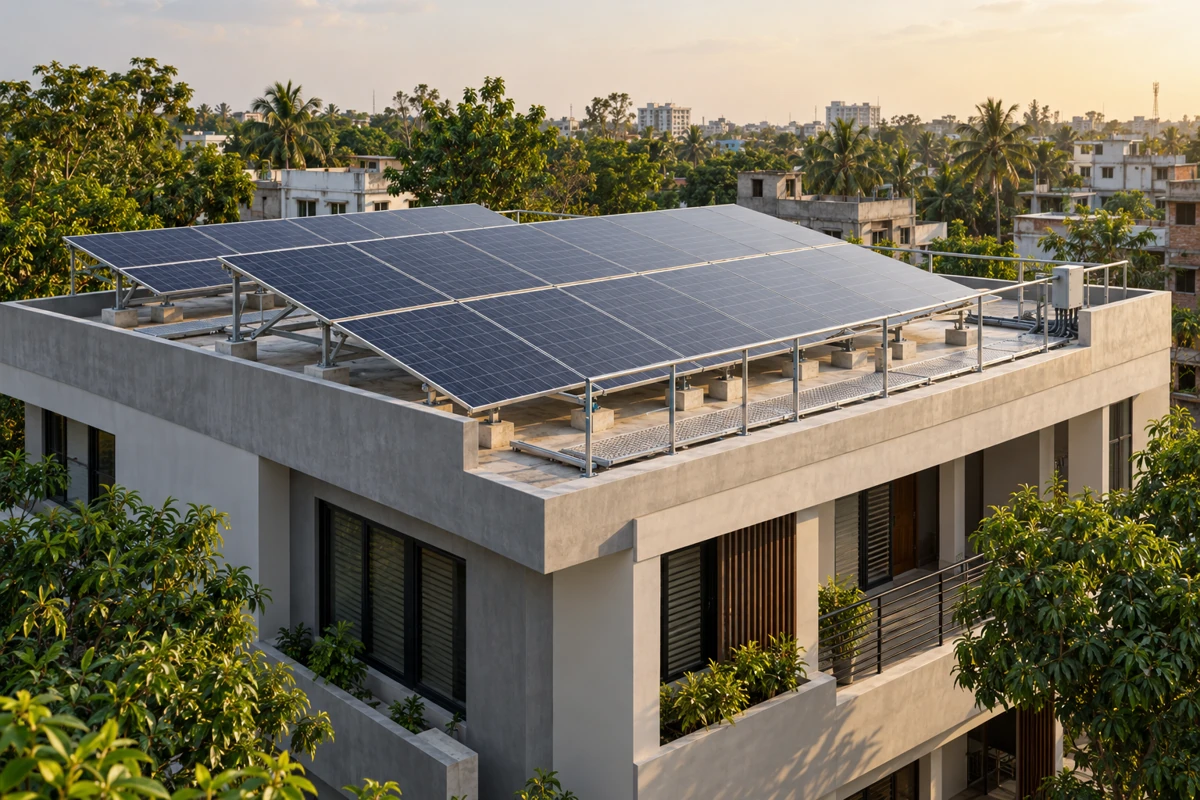
Choose the outcome you need
For a grid-connected home with daytime consumption, an on-grid system may be worth reviewing. If essential appliances must work during an outage, discuss a compatible hybrid inverter, battery and protected backup circuit. A standard on-grid installation does not keep supplying the home during a grid failure.
Measure the usable roof
Check ownership or permission to use the roof, shading, structural condition and access. Water tanks, stair rooms and nearby buildings can reduce the available area. Do not count the entire roof as panel space: the layout must leave suitable access and clearances. Apartment buildings also need agreement on whose meter receives the solar connection.
Build an appliance and consumption picture
Collect recent bills and list the appliances that operate during daylight. For backup, identify essential loads separately, such as lights, fans, communications and a refrigerator. Motors, pumps and air conditioners need their starting demand considered; appliance count alone cannot determine inverter size.
Understand the full installed scope
A residential proposal should identify panels, inverter, mounting, electrical protection, cable route and earthing. If batteries are included, compare usable storage, supported loads, operating conditions and the actual warranty documents. Price and backup duration depend on the selected equipment and installation.
Plan grid approval before export
Residential net metering must be reviewed against the current connection and utility requirements. Single-phase and three-phase equipment need the appropriate review. Permission to install or export is a utility decision; an online estimate cannot approve the connection.
Have your bill and roof details ready?
Use the calculator for a first estimate, or continue the solar conversation with our team.
- SREDA Net Metering Guidelines 2025 — applicable policy and technical review.
- Power Division net-metering portal and official FAQ — process, equipment resources and general planning information.
- Utility solar calculator — 1,300 kWh/kWp/year yield and 9 m²/kWp area baselines. Its older tariff and capacity rules are not used here.
Final design, eligibility, costs, equipment warranty and availability are confirmed for each project. Consult current utility instructions before applying.